
SoulBody & Syntax Sorceress
Wife, mum of 6, former psycholinguist turned embodied relationship coach: green tea, nature vs nurture, decoding femininity & masculinity — so you can actually win at life. ✨
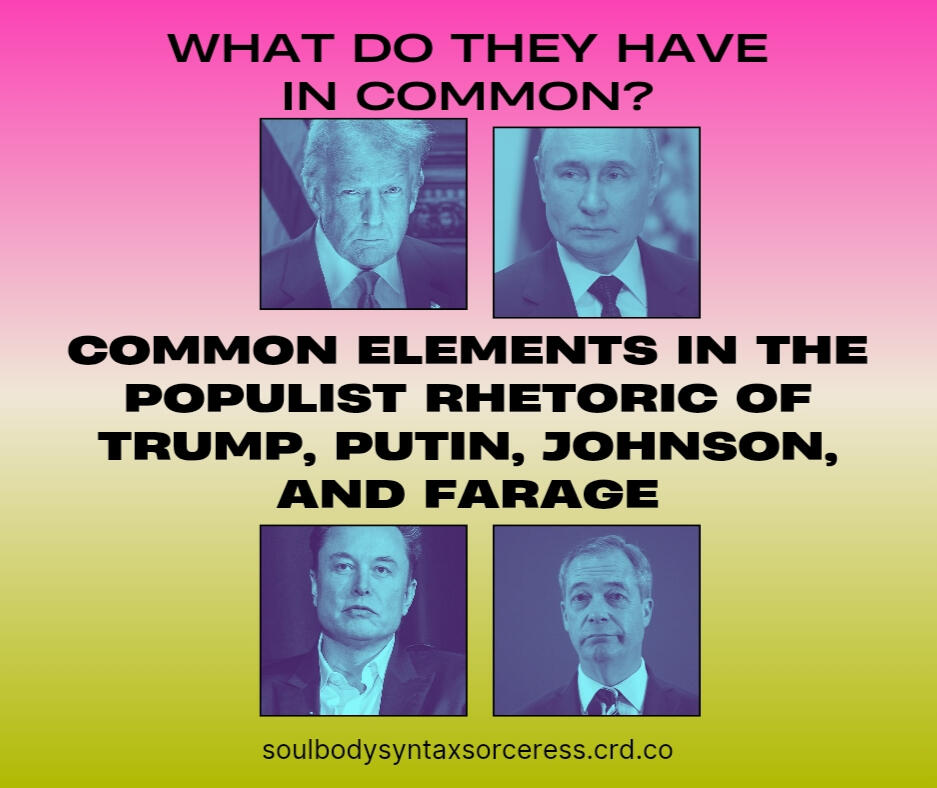
Common Elements in the Populist Rhetoric of Trump, Putin, Johnson, and Farage
Donald Trump, Vladimir Putin, Boris Johnson, and Nigel Farage share several rhetorical strategies characteristic of populist leaders. They often evoke a nostalgic longing for a perceived better past to galvanize support. Trump frequently references the "old days" when America was ostensibly more prosperous and unified, while Johnson portrays Brexit as a chance for the UK to reclaim its former global stature, suggesting that "the empires of the future would be empires of the mind" . Farage has criticized globalists for allegedly undermining national sovereignty, asserting that "globalists have wanted to have some form of conflict with Russia as an argument for us all to surrender our national sovereignty" . These leaders also position themselves as outsiders challenging entrenched elites. Trump's pledge to "drain the swamp" in Washington parallels Johnson's critiques of European Union bureaucrats, whom he once compared to the Italian mafia by stating that "to keep insisting that the EU is about economics is like saying the Italian mafia is interested in olive oil and real estate" . Farage similarly portrays himself as a defender against a "new world order" orchestrated by global elites . Additionally, these figures often utilize provocative and combative language to energize their base and draw clear distinctions between 'us' and 'them'. For instance, Farage has employed violent metaphors in his speeches, such as declaring his return to politics with "both barrels" and aiming to "put the fear of God" into MPs opposing Brexit. Similarly, Trump has a history of using violent rhetoric, including praising physical assaults on journalists and offering to pay legal fees for supporters who engage in violence against protesters. Johnson has praised Trump's leadership, describing him as a "very compassionate man," despite controversies surrounding Trump's actions and policies. Farage has also expressed support for Trump's strategies, suggesting that Putin is a pawn in Trump's strategic game of chess. These rhetorical approaches serve to mobilize supporters by appealing to emotions, fostering a sense of unity against common adversaries, and promoting a vision of national rejuvenation.Policies Reflecting Similar Political BehaviorIn terms of policy, these leaders exhibit similar political behaviors that align with their populist rhetoric. Trump's "America First" agenda emphasizes national sovereignty and economic protectionism, including renegotiating trade deals and reducing immigration. Johnson's championing of Brexit reflects a desire to reclaim legislative autonomy from the EU, resonating with themes of national sovereignty and control over immigration. Farage's advocacy for Brexit and criticism of globalist agendas align with his promotion of national sovereignty and skepticism toward supranational entities. Putin's policies often emphasize Russian nationalism, resistance to Western influence, and the promotion of traditional values, aligning with his portrayal as a defender of Russian sovereignty against external pressures. Collectively, these policies underscore a preference for national autonomy, skepticism toward globalization, and a focus on preserving traditional cultural identities.
Attachment Styles and Dark Triad Personality Traits of Donald Trump, Vladimir Putin, Boris Johnson, and Nigel Farage.
I think it is important to recognise what type of people are giverning us or try to influence us. From.my perspective psychological ans psycholingusitic aspects of modern politics are fascinating, yet very troubling. Therfore, I decided to conduct research from.availible sources and here are the results.■ How Politicians Relate to Others: Their Attachment StylesAnalyzing the attachment styles and Dark Triad personality traits—Machiavellianism, Narcissism, and Psychopathy—of political figures such as Donald Trump, Vladimir Putin, Boris Johnson, and Nigel Farage requires careful consideration, as direct psychological assessments are not publicly available. However, insights can be drawn from observed behaviors and existing studies.■ Attachment StylesAttachment styles, developed in early childhood, influence interpersonal relationships. While specific attachment styles of these leaders are not documented, certain behaviors may offer clues. For instance, a leader exhibiting high self-confidence and a need for admiration might suggest traits associated with insecure attachment styles. However, without direct psychological evaluations, assigning specific attachment styles to these individuals remains speculative.■ How Attachment Styles Impact a Politician’s Decision-Making ProcessAttachment styles, formed in early childhood, can profoundly influence a leader’s approach to decision-making, relationships, and crisis management. Politicians with an avoidant attachment style may struggle with emotional intimacy and view reliance on others as a weakness, leading to authoritarian tendencies or isolationist policies. For example, Vladimir Putin’s emotionally distant persona and preference for unilateral decision-making could reflect avoidant traits, influencing his willingness to use force and resist international cooperation. Leaders with an anxious attachment style, craving validation and fearing rejection, might make impulsive decisions to maintain public approval. Donald Trump’s erratic policy shifts and constant need for admiration through rallies and social media align with this pattern. In contrast, a secure attachment style could foster empathy and balanced decision-making, but politicians with insecure styles might double down on rigid ideologies when feeling threatened. For instance, Boris Johnson’s charm and charisma mask moments of grandiosity and recklessness, potentially signaling an anxious-avoidant dynamic that influences his inconsistent political stances. Meanwhile, Nigel Farage’s combative populism and us-vs-them mentality might stem from avoidant tendencies, driving him to reject compromise and amplify division as a defense mechanism. Ultimately, attachment styles shape how leaders handle criticism, form alliances, and weigh risks, subtly steering the emotional core of political leadership and shaping national trajectories.■ Dark Triad Personality TraitsThe Dark Triad encompasses three personality traits:● Machiavellianism: Manipulative behavior, a focus on self-interest, and strategic exploitation.● Narcissism: Grandiosity, entitlement, dominance, and a need for admiration.● Psychopathy: Impulsivity, lack of empathy, and antisocial behaviors.A notable study by psychologist Dr. Kevin Dutton in 2016 utilized the Psychopathic Personality Inventory-Revised (PPI-R) to assess the psychopathic traits of various historical and political figures through expert evaluations. According to this study, Donald Trump scored 171 points, surpassing Adolf Hitler's 169 points. Margaret Thatcher scored 136 points, while Elizabeth I scored 130. Jesus and Saint Paul both scored 157 points. These findings suggest that politicians and business leaders often demonstrate psychopathic qualities.While specific percentage breakdowns of each Dark Triad trait for these leaders are not publicly available, their behaviors and public personas provide some insights:■ Donald Trump: His public persona exhibits traits associated with narcissism, such as grandiosity and a constant need for admiration. Behaviors suggesting Machiavellianism include strategic manipulation and a focus on self-interest. Traits associated with psychopathy, such as impulsivity and a lack of empathy, have also been observed.■ Vladimir Putin: His leadership style reflects high levels of Machiavellianism, evident in strategic political maneuvers and a focus on power consolidation. Traits associated with psychopathy, such as a lack of empathy and ruthless decision-making, have been reported.■ Boris Johnson: His political career has displayed traits associated with narcissism, including charm and a need for admiration. Behaviors suggesting Machiavellianism include political opportunism and strategic positioning.■ Nigel Farage: His public persona exhibits traits associated with narcissism, such as charisma and a desire for attention. Behaviors suggesting Machiavellianism include strategic manipulation to achieve political goals.■ The Influence of Dark Triad Traits on Leadership Styles in PoliticsDark Triad traits — Machiavellianism, Narcissism, and Psychopathy — can significantly shape leadership styles, especially in high-stakes political environments. Leaders high in Machiavellianism tend to be strategic, manipulative, and pragmatic, using cunning tactics to maintain power and outmaneuver rivals. For example, Vladimir Putin’s political maneuvers, including silencing dissent and consolidating control, illustrate this trait’s influence on leadership. Narcissism, characterized by grandiosity, entitlement, and a need for admiration, can drive leaders to seek constant validation, as seen in Donald Trump’s reliance on public rallies and social media to cultivate loyalty and reinforce his persona. This trait can inspire bold, charismatic leadership but also lead to impulsivity and fragile self-esteem when criticized. Psychopathy, marked by emotional detachment, lack of empathy, and risk-taking, can embolden leaders to make ruthless decisions without regard for human cost — such as Putin’s military aggression or Trump’s willingness to inflame divisions for political gain. While these traits can fuel confidence and resilience under pressure, they also correlate with unethical behavior and a tendency to prioritize personal or nationalistic interests over collective well-being. The Dark Triad can produce leaders who are simultaneously captivating and dangerous, able to rally masses through charm and forceful rhetoric while pursuing power with little regard for moral boundaries. This combination makes such figures both compelling and polarizing, as their leadership style thrives on division, emotional manipulation, and the careful orchestration of public perception.■ The Ethical Implications of Leaders with High Dark Triad TraitsWhen political leaders exhibit high levels of Dark Triad traits — Machiavellianism, Narcissism, and Psychopathy — the ethical consequences can ripple across societies. Machiavellian leaders may manipulate public sentiment, twist facts, or suppress dissent to maintain control, undermining democratic norms. For instance, Vladimir Putin’s calculated political maneuvers and censorship of opposition voices illustrate how strategic deceit can corrode political trust. Narcissistic leaders, craving constant validation, may prioritize personal image over public welfare, leading to policy decisions driven by optics rather than substance. Donald Trump’s handling of crises, where messaging often overshadowed concrete action, highlights how self-obsession can distort leadership priorities. Psychopathic traits, like emotional detachment and impulsivity, can result in reckless or harmful policies, as seen in aggressive foreign interventions or the glorification of violence in political rhetoric. While these traits can foster resilience, boldness, and charismatic leadership, they also increase the risk of authoritarianism, human rights violations, and divisive governance. Leaders high in Dark Triad traits might view morality as flexible, justifying unethical actions as necessary for the “greater good” — a mindset that can destabilize nations and escalate conflicts. Understanding the impact of these traits isn’t just academic; it’s crucial for holding leaders accountable and safeguarding societies from the destructive potential of unchecked power.
The Elusive Technocrat Who Pushes The Right Buttons: Elon Musk
Elon Musk is a complex individual, and analyzing his attachment style, personality traits according to the Dark Triad, political behaviors, propaganda language, and dark deeds requires careful attention to various aspects of his public persona and history.1. Attachment StyleMusk’s attachment style is not definitively known, as attachment styles are deeply personal and can vary across different relationships and circumstances. However, based on public observations, Musk may exhibit signs of avoidant attachment, characterized by emotional distance, a preference for independence, and difficulty relying on others. He has often been described as highly driven, occasionally appearing detached or focused on his goals, sometimes to the detriment of his personal relationships. His high work demands and reports of strained relationships also suggest a potential detachment from intimacy and emotional connection.2. Personality Traits: The Dark TriadThe Dark Triad consists of three traits: narcissism, Machiavellianism, and psychopathy. Here’s how Musk might align with these:Narcissism: Musk’s behavior suggests a strong sense of self-importance, with a constant need for admiration and validation. His public displays of grandiosity, like his ambitious goals to colonize Mars or create a sustainable future through Tesla, can be seen as narcissistic traits. He often displays confidence in his ability to change the world and is highly visible on social media, which fuels his personal brand.Machiavellianism: Musk shows elements of Machiavellianism—a strategic, calculated, and sometimes manipulative approach to achieve personal or corporate goals. He has engaged in controversial tactics, such as using social media to influence stock prices or pushing for aggressive timelines in his ventures, which suggests a willingness to manipulate situations for his benefit.Psychopathy: Some aspects of Musk’s behavior could point to low empathy and a tendency toward risk-taking, traits associated with psychopathy. His blunt, sometimes controversial public statements, his tendency to disregard social norms when it suits his goals, and his willingness to put pressure on employees to work long hours with high expectations could indicate a lack of concern for the well-being of others, though this may also be tied to his obsession with achieving his goals.3. Political BehaviorsMusk's political behaviors have evolved over time, with fluctuating stances on various issues. He has made libertarian-leaning statements, advocating for less government intervention, particularly in the context of business and technology. Musk has also shown support for certain right-wing populist movements, particularly in the context of free speech, which gained prominence after his acquisition of Twitter (now X). He also criticized certain government policies, particularly those related to taxation and regulations that he perceives as restrictive for innovation.Musk’s political actions often seem to align with his business interests. For instance, his push for government subsidies for electric cars and renewable energy sources while avoiding taxes (using legal loopholes) has led some to view his actions as opportunistic and self-serving, despite claims of championing progressive causes like sustainability.4. Propaganda LanguageMusk has used propaganda-like language to shape public perception and mobilize his followers. He frequently uses social media to broadcast his personal narrative, aligning his ventures with broad, idealistic goals, such as saving humanity by reducing dependence on fossil fuels or creating a multi-planetary species. The language often appeals to a sense of utopian idealism while masking the practical and corporate objectives underlying his efforts.Musk also leverages media attention effectively, often using provocations or controversial statements to generate press and amplify his ideas. This can be seen as a form of self-promotion or "branding" that aligns with the image of a heroic innovator. His management of the public narrative surrounding Tesla, SpaceX, and Twitter (X) often presents him as the revolutionary disruptor challenging established systems.5. Dark DeedsMusk’s dark deeds are often controversial and suggest a complex ethical landscape. Some examples include:Labor practices: Musk’s companies have faced accusations of poor working conditions, especially at Tesla factories, where employees have reported long hours, dangerous work environments, and inadequate compensation. Musk has publicly dismissed some of these claims or downplayed them, leading to criticisms of exploitative practices.Manipulation of markets: Musk’s tweets have caused significant fluctuations in the stock prices of companies like Tesla and cryptocurrencies like Bitcoin and Dogecoin. At times, this behavior has been described as market manipulation, especially given Musk's influence over financial markets and his ability to provoke reactions with minimal effort.Public shaming and harassment: Musk has publicly attacked critics, journalists, and even former employees. His social media posts often take an aggressive tone, and he’s known to engage in “doxxing” (the practice of revealing personal information) or other tactics to silence opposition or challenge narratives he disagrees with.Personal life controversies: Musk's personal life, including his high-profile relationships and sometimes problematic behavior towards family members and former partners, has been a source of public intrigue and scrutiny, often painting him as a person willing to prioritize his ambitions over personal relationships.ConclusionElon Musk presents a fascinating case study in the intersection of personal traits, political behaviors, and the exercise of power. His attachment style, Dark Triad traits, and political behaviors reveal a figure who is highly ambitious, self-serving, and willing to manipulate circumstances to achieve his goals. Musk’s use of propaganda and sometimes questionable actions or “dark deeds” further underscores his tendency to prioritize his vision and his personal brand, often at the expense of others. Despite these criticisms, he has undeniably been an influential figure in reshaping industries and shaping global discourse.
The Alliegance Based on Ego: Trump and Musk
Elon Musk's allegiance with Donald Trump and his administration is a complex and evolving relationship, and it has had various implications for both political power and the livelihoods of American citizens.1. Allegiance with Trump and the AdministrationMusk’s relationship with Trump has been somewhat contradictory, and it has shifted over time. Early in Trump's presidency, Musk was a vocal critic of the administration’s stance on climate change and environmental policies. However, Musk did not entirely distance himself from Trump, and he initially joined Trump’s American Manufacturing Council in 2017, though he later resigned after Trump’s controversial comments on the Charlottesville protests.Over time, Musk's allegiance with Trump and his administration has been more nuanced. Musk has often praised Trump for his economic policies, particularly his stance on deregulation and tax cuts, which he viewed as beneficial for business growth. Trump’s corporate tax cuts, for example, reduced tax burdens on many companies, including Musk’s Tesla and SpaceX. Musk has also shown support for certain aspects of Trump’s populist rhetoric, including calls for a focus on American manufacturing and the American worker, though this is complicated by Musk's international business operations and his often libertarian views.Musk's support for Trump and the administration seems to align primarily with his business interests rather than a deep ideological commitment to Trump’s broader political agenda. Musk has historically favored free-market capitalism, lower taxes, and minimal government interference, which aligns with many of Trump’s policies, particularly on business and taxes.2. Impact on Power in the USAMusk’s relationship with Trump has had significant implications for the distribution of power in the United States, particularly in the business and political spheres:Business Influence: Musk’s companies, especially Tesla and SpaceX, have benefitted from favorable policies under the Trump administration. The tax cuts passed under Trump’s government, for instance, lowered corporate tax rates, which helped companies like Tesla. Additionally, SpaceX has received government contracts and subsidies from NASA and the U.S. Department of Defense, which have been instrumental in its success. Musk’s political alignment with Trump likely helped ensure that SpaceX and other ventures continued to receive federal support.Deregulation: The Trump administration focused on deregulation, which often benefited large corporations and industries like energy, tech, and manufacturing. Musk, a prominent figure in these sectors, has supported such policies as they often reduce regulatory burdens and enable faster innovation and growth in areas like electric vehicles, space exploration, and renewable energy. However, deregulation can also create concerns about environmental protection, worker safety, and other public interests, which may negatively impact broader segments of society.Media and Public Perception: Musk’s public support for Trump can influence the political discourse, particularly among his large social media following. Musk has used his platform to speak out on political issues and support political candidates, and his endorsement (or tacit approval) of Trump’s administration may shape public attitudes toward Trump’s policies, especially among those who admire Musk’s business success. His influence can thus amplify the populist political narratives championed by Trump.3. Impact on the Livelihood of American CitizensWhile Musk’s allegiance with Trump may align with certain business interests, the broader impact on American citizens—particularly their livelihoods—is more complex and multifaceted.Job Creation vs. Job Quality: Musk has been a proponent of American manufacturing, particularly through Tesla’s efforts to produce electric vehicles domestically. However, while Tesla and SpaceX have created thousands of jobs, the working conditions in these companies, particularly in Tesla’s factories, have been under scrutiny. Reports have highlighted concerns about long working hours, low wages, and dangerous working conditions, which may undermine the well-being of employees. In this sense, while Musk’s companies contribute to the economy and job creation, the quality of those jobs may not always improve the livelihood of the average American worker.Wealth Inequality: Musk’s wealth accumulation is a significant issue in discussions about inequality in the U.S. His net worth has soared, especially during the Trump administration, which focused on tax cuts for the wealthy and deregulation. Critics argue that policies that benefit the wealthiest individuals, like Musk, exacerbate the wealth gap, leaving ordinary citizens with fewer resources. Musk’s wealth, which fluctuates with the performance of his companies, contrasts sharply with growing economic disparity across the U.S.Environmental Impact: Musk’s push for electric vehicles, renewable energy, and sustainable technologies aligns with some of the progressive goals of reducing the country’s reliance on fossil fuels. However, Trump’s rollback of environmental regulations, including those aimed at limiting carbon emissions and protecting public lands, has raised concerns about the future of the environment. Musk’s alignment with Trump may signal a lack of commitment to aggressive climate policies, which could impact the livelihoods of Americans in terms of health, livelihoods, and the long-term stability of the economy.Social Media and Political Division: Musk’s influence on platforms like Twitter (X) has given him the power to shape political narratives and public opinion. His use of social media to support Trump’s political agenda, especially with controversial statements or attacks on critics, has been polarizing. While Musk champions free speech, critics argue that his behavior and propaganda-like rhetoric can contribute to political division and disinformation, which can harm democratic processes and the overall health of society.ConclusionMusk’s allegiance with Trump is largely driven by mutual interests in business growth, deregulation, and tax policies that benefit the wealthy and the corporations they lead. While Musk’s political actions have contributed to business success, they have had mixed effects on power dynamics and the livelihoods of citizens. Musk’s businesses have created jobs and technological innovations, but the quality of those jobs and the social costs associated with wealth inequality, environmental deregulation, and political polarization can undermine the broader welfare of the public. His actions and statements have the potential to shape both the political landscape and the economic reality for everyday Americans.
Is There A Common Ground? Analysing Political Tactics of Trump, Putin, Musk and Farage.
Analyzing the tactics, allegiances, lies, and motivations of Donald Trump, Elon Musk, Vladimir Putin, and Nigel Farage, especially in the context of their hunger for political power, reveals a complex interplay of personal traits, psychological dynamics, and power strategies. Many of these individuals exhibit behaviors that suggest they are influenced by disturbed characteristics, possibly rooted in narcissism, Machiavellianism, and psychopathy—traits often associated with the Dark Triad. They may also follow the cycle of abuse, manipulating people and systems in ways that mimic the dynamics of abusive relationships.
■1. Donald TrumpTactics:Trump’s political tactics are built on provocation, exaggeration, and exploitation of divisiveness. He has often used polarizing rhetoric, targeted his critics, and leveraged social media to maintain a direct line to his supporters, bypassing traditional media channels. His rhetoric often includes blatant lies, conspiracy theories, and disinformation, all of which serve to manipulate public perception and maintain his control.Allegiances:Trump’s allegiances are often transactional and rooted in personal gain. He has allied with conservative factions, populists, and figures who help advance his agenda, such as right-wing figures, business magnates, and other controversial leaders. His allegiances seem to be based on mutual support for corporate deregulation, tax cuts, and anti-immigration policies.Lies:Trump has been widely accused of lying or distorting the truth throughout his career, especially during his presidency. From false claims about the election results to exaggerated economic statistics, Trump’s lies are often designed to manipulate his supporters, discredit his enemies, and maintain power.Motivation for Political Power:Trump’s hunger for power can be attributed to several factors. First, he has a narcissistic need for validation, constantly seeking admiration and control over public opinion. Second, political power allows him to sustain and expand his wealth, especially in a system where business interests and politics are intertwined. Finally, his actions suggest a deep-seated fear of irrelevance, and political power serves as a means to maintain influence over both the media and his followers.Cycle of Abuse:Trump exhibits behaviors akin to those seen in the cycle of abuse. He uses devaluation (attacking opponents, belittling the press), followed by hoovering (attempts to pull people back into his orbit, often with promises of rewards or threats), and gaslighting (distorting the truth to manipulate perceptions). His interactions with both individuals and groups often follow a similar pattern, using manipulation and emotional control.■2. Elon MuskTactics:Musk's tactics are often focused on self-promotion, media manipulation, and the use of provocative statements to keep himself in the public eye. Like Trump, Musk often uses social media to create narratives, shape discourse, and engage with his followers. He has also used market manipulation (e.g., tweets about Tesla's stock or cryptocurrency) to influence markets and drive his agenda forward.Allegiances:Musk’s allegiances are primarily to his business ventures and technological advancements. He has shown a willingness to ally with figures who support deregulation, corporate tax cuts, and policies that benefit his companies, such as tax incentives for electric vehicles. His brief support for Trump and the populist agenda aligns with his individualistic, libertarian worldview.Lies:Musk is often accused of making exaggerated claims, such as regarding Tesla’s production timelines or the capabilities of his companies. His statements often blur the line between visionary optimism and deceptive marketing. For instance, his promises about self-driving cars have faced backlash when they did not materialize as expected.Motivation for Political Power:Musk’s drive for power is more subtle than Trump’s but still rooted in a desire for control and influence. His narcissistic traits manifest in his desire to be seen as a global visionary and the person who can reshape humanity's future, particularly through space exploration and sustainable technologies. His political alignment appears pragmatic—he supports policies that help him and his companies thrive.Cycle of Abuse:Musk’s tactics in relationships with employees and critics sometimes resemble the cycle of abuse. He displays idealization by praising his employees or followers, only to later devalue them when things don’t meet his expectations (e.g., firing employees in public, creating highly demanding work environments). His control over public narratives via social media can also mimic gaslighting by distorting facts or attacking those who disagree with him.■3. Vladimir PutinTactics:Putin’s political tactics are built on authoritarianism, propaganda, and fear tactics. He uses disinformation and state-controlled media to shape public opinion and create a narrative that supports his power. He has employed coercion, intimidation, and human rights abuses to eliminate political opposition and maintain control.Allegiances:Putin’s allegiances are rooted in maintaining Russian power on the global stage. His alliances with oligarchs and authoritarian leaders (e.g., Assad in Syria, Erdogan in Turkey) help him maintain internal control and influence. Putin uses these alliances to consolidate power both domestically and internationally, making his policies deeply self-interested.Lies:Putin is notorious for using lies and disinformation to manipulate both the Russian population and the international community. His government has repeatedly denied involvement in cyber-attacks, political assassinations, and other forms of aggression, while simultaneously spreading false narratives to shift blame.Motivation for Political Power:Putin’s hunger for political power stems from a desire for absolute control over Russia and its resources. He seeks to restore Russian glory, project strength on the world stage, and maintain a tight grip on the economy and military. His psychopathic tendencies (e.g., ruthlessness, lack of empathy) have allowed him to systematically eliminate political opponents and silence dissent.Cycle of Abuse:Putin’s political style follows a cycle of abuse with gaslighting the Russian people into believing in his vision of a strong Russia. He manipulates public opinion through state-controlled media, devalues opposition by branding them as traitors or foreign agents, and hoovers back those who challenge him by offering rewards (e.g., economic benefits, political power) for loyalty.■4. Nigel FarageTactics:Farage’s tactics rely on nationalistic rhetoric, fear-mongering, and exploitation of populism. He is a master at playing on public insecurities, using issues like immigration and sovereignty to rally support for his causes. Farage uses simplified narratives to appeal to emotions rather than facts, often invoking scare tactics about the EU or immigration.Allegiances:Farage’s allegiances are with anti-establishment movements, particularly those aligned with right-wing populism. His most prominent political victory, leading the Brexit movement, was largely driven by his alliance with anti-European Union forces, advocating for Britain to regain control over its laws and borders.Lies:Farage has been known for making exaggerated or misleading statements, such as false claims about the benefits of Brexit (e.g., NHS funding, immigration control). His rhetoric often simplifies complex issues into binary choices, and his claims about the EU or immigration have been called out as misleading.Motivation for Political Power:Farage’s drive for power is motivated by a desire for nationalistic control and cultural preservation (as he sees it). His political career is based on disrupting the status quo and championing populist causes, which allows him to exert influence and shape political discourse in the UK. He seeks to maintain influence by positioning himself as the voice of the people against the political elite.Cycle of Abuse:Farage’s behavior follows the cycle of abuse, especially in his use of scapegoating and gaslighting. He frequently devalues the European Union and political opposition by portraying them as threats to national identity, then hoovers back the public by promising a return to national greatness and control.■ Conclusion: Why Are They Hungry for Power?These individuals exhibit traits often associated with narcissism, psychopathy, and Machiavellianism—traits that drive them toward power. Their hunger for political control can be understood through several lenses:1. Narcissistic Need for Validation: They seek power to affirm their superiority, influence public perception, and reinforce their self-importance.2. Control and Manipulation: They desire control over systems and people, whether through media manipulation, fear tactics, or abusive dynamics.3. Wealth and Personal Gain: Political power allows them to secure financial and social advantages, enabling them to enrich themselves and expand their influence.4. Psychological Factors: They may be driven by deep insecurities or trauma and seek power as a way to compensate for inner vulnerabilities.Their behavior mirrors the cycle of abuse—they manipulate, gaslight, devalue, and control those around them to maintain dominance. Ultimately, their hunger for power is not just about governance, but about psychological control, self-aggrandizement, and maintaining their dominance over both systems and individuals.
The Rise of Power: Unraveling the Forces Behind Modern Political Leaders
The emergence of Donald Trump, Elon Musk, Vladimir Putin, and Nigel Farage as influential political and power figures is a result of complex historical, sociological, anthropological, psychological, psycholinguistic, and political factors. These individuals did not emerge in a vacuum, but rather at a time when certain societal, political, and economic conditions were ripe for the rise of such figures. Below is an analysis of these factors that have led to their rise to power, viewed through various academic lenses.1. Historical ContextThe rise of these figures can be understood against the backdrop of historical cycles of power, conflict, and societal shifts. In particular, they emerged during periods marked by globalization, economic instability, and technological change.Donald Trump emerged in the wake of the Great Recession of 2008, when many working-class Americans, particularly white voters, felt left behind by a globalized economy. The disillusionment with the political elite, coupled with the increasing divides over immigration and trade, created fertile ground for populism. Trump's rise is also intertwined with the long-standing tensions in the U.S. culture wars, where the right-wing agenda of nationalism, populism, and anti-globalism found a new voice.Elon Musk emerged during a time of significant technological innovation and the increasing importance of the tech industry in global economics. The rise of Silicon Valley and the digital revolution created an environment that fostered individuals who were able to think disruptively and challenge traditional systems of power. Musk’s success is rooted in the technological boom and venture capitalism that facilitated the rise of companies like Tesla and SpaceX.Vladimir Putin rose in the aftermath of the collapse of the Soviet Union in 1991, during a time of economic crisis and social instability. The rapid privatization of state assets and the disintegration of the former Soviet empire left Russia vulnerable to economic chaos and political fragmentation. Putin, a former KGB officer, capitalized on this chaos by positioning himself as a strongman who could restore order, national pride, and economic stability. His rise also occurred at a time when Russia was seeking to redefine its place in the post-Soviet world order.Nigel Farage rose as the leader of the Brexit movement in the UK. His emergence occurred against the backdrop of growing dissatisfaction with the European Union (EU) and the increasing sentiment that globalization and immigration were undermining national identity. Farage’s rise can be tied to the decline of traditional party politics in the UK, the rise of populist nationalism, and the dissatisfaction with the political establishment, especially following the financial crisis and austerity measures.2. Sociological ContextSociologically, the rise of these figures can be understood in terms of the shift toward individualism and the decline of traditional structures of authority. As societies became more globalized and diverse, many people felt alienated or disconnected from the traditional systems of power that had once guided them.Alienation: Many of Trump’s and Farage’s supporters, especially in the working-class demographics, felt left behind by globalization and technological change. They perceived their lives as being disempowered by larger systemic forces—such as global trade deals, immigration policies, and EU regulations—which they felt were diminishing their cultural, economic, and political power.Identity Politics: The rise of identity politics played a significant role in the emergence of these leaders. Trump capitalized on the cultural divides in the U.S., using the language of white nationalism and anti-immigrant sentiment to rally his base. Farage tapped into similar nationalist sentiments in the UK, especially around the issue of Brexit, framing it as a battle to reclaim national sovereignty and identity.Populism: The growth of populist movements in both the U.S. and Europe, which reject elite institutions and advocate for the will of "the people," gave rise to figures like Trump and Farage. These figures claimed to be the voices of ordinary people, promising to challenge the "establishment" and restore power to the masses.3. Anthropological ContextFrom an anthropological perspective, the political rise of figures like Trump, Musk, Putin, and Farage can be seen as a manifestation of a return to traditional forms of leadership in times of crisis.Charismatic Leadership: These figures exhibit what Max Weber described as charismatic authority—leaders who inspire loyalty and devotion through their personal qualities rather than through institutional structures. In times of social upheaval, such leaders often emerge to restore order and define new narratives about the future of society.Tribalism: The appeal of these leaders often lies in their ability to appeal to tribal instincts—the sense of belonging to a group or nation. For example, Trump’s rhetoric often pits his supporters against the liberal elites, creating a "us vs. them" dynamic. Similarly, Farage used Brexit to galvanize a sense of belonging to a specific cultural identity.4. Psychological ContextPsychologically, these leaders exhibit behaviors that align with certain dark triad traits: narcissism, Machiavellianism, and psychopathy. These traits can make them particularly adept at navigating the power struggle and manipulating the public sphere to their advantage.Narcissism: Trump, Musk, and Putin display narcissistic tendencies—an overwhelming need for admiration and validation. Their personalities are shaped by an intense focus on self-glorification, which is often used to drive public narratives. This is also reflected in their ability to charm and manipulate the media and their followers.Machiavellianism: All of these figures demonstrate a strategic, often cynical approach to politics. Musk and Farage, for example, use disruptive strategies to build influence, while Putin’s rise to power was marked by manipulating public sentiment and stoking nationalistic fervor.Psychopathy: Putin, in particular, exhibits traits associated with psychopathy, such as ruthlessness, lack of empathy, and manipulation. His use of violence and coercion to maintain power, as well as his ability to deceive and intimidate, points to a willingness to use any means necessary to achieve and retain control.5. Psycholinguistics and Political RhetoricThe use of language and communication is central to the political strategies of these figures. Psycholinguistics reveals that these leaders often use language that simplifies complex issues, invokes emotion, and creates strong in-group/out-group dynamics.Trump: His use of repetition, simple language, and emotional appeal resonates with his base. He often employs rhetorical questions and polarizing language, making it easy for his followers to latch onto his messages. His style is non-elitist and often appeals to gut instincts over reasoned debate.Musk: Musk’s use of language is more calculated and visionary, often invoking language around innovation, disruption, and futurism. He uses social media to project an image of genius, using psycholinguistic techniques like self-deprecating humor and hyperbole to enhance his appeal.Putin: Putin’s language is controlled and authoritative, designed to convey strength and dominance. His use of language often centers around ideas of nationalism, sovereignty, and Russia's role in the world. He manipulates historical narratives to appeal to patriotism and create a sense of national unity.Farage: Farage uses language that emphasizes national pride and positions the EU as a threat to British identity. His rhetoric relies heavily on fearmongering and simplification of complex issues, appealing to those who feel disenfranchised by the globalized world.6. Political Power Struggle, War, and ManipulationThe political power of these figures can also be seen as part of the broader struggle for control. In some cases, this is about maintaining a status quo (e.g., Putin’s efforts to maintain Russian dominance) or disrupting existing systems for personal or ideological gain (e.g., Trump’s populism, Farage’s Brexit campaign).Their power struggles are not limited to elections and public office—they also encompass international relations (Putin’s geopolitical maneuvers), business ventures (Musk’s companies and their influence), and media narratives (Trump and Farage’s manipulation of public opinion).ConclusionThe emergence of Trump, Musk, Putin, and Farage is the result of a complex intersection of historical, sociological, psychological, and political forces. These figures were able to rise to power because they capitalized on societal and global conditions, emotional polarization, and rhetorical manipulation. Their hunger for power stems from a combination of personal ambition, strategic positioning, and the use of psychological tactics to manipulate public opinion and solidify their influence. In many ways, they represent the convergence of personal pathology with the power dynamics of the contemporary world.

Falsehood is New Religion: Why Poeple Choose to Believe Trump?
Let’s break this down! The tendency to believe falsehoods — even when confronted with facts — is tied to several well-researched psychological phenomena. These include cognitive biases, emotional needs, and the way our brains process information. Let’s explore what’s happening:1. Cognitive Biases:Confirmation Bias: People seek out and believe information that aligns with their existing beliefs, while dismissing contradictory evidence.Positive Continuity Bias: Humans are wired to favor narratives that preserve a positive self- or group-image, even if they’re not true.Truth-Default Theory: We tend to assume what we hear is true unless there's overwhelming evidence to the contrary.2. Emotional & Psychological Needs:Need for Certainty and Simplicity: In chaotic times, people crave simple, black-and-white explanations. Trump’s messaging, for instance, often provides straightforward answers to complex problems.The Fairytale Effect: People are drawn to hopeful, heroic narratives. The idea that someone is fighting for them against corruption or injustice can feel empowering, even if it’s a distortion of reality.Fear and Threat Perception: People are more susceptible to misinformation when they feel afraid or under threat. Trump’s rhetoric often plays into fears (e.g., about immigration, job loss), reinforcing the falsehoods as protective beliefs.3. Social and Group Dynamics:Social Identity Theory: People align their beliefs with their group to maintain a sense of belonging. Admitting Trump lied might feel like betraying their tribe.Echo Chambers & Filter Bubbles: Social media algorithms reinforce people's biases, showing them content that confirms their views and shielding them from counterarguments.4. Psychological Theories:Motivated Reasoning: People interpret information through the lens of their desires and fears. If believing Trump’s lies makes them feel safer or more powerful, they’ll unconsciously twist facts to fit that narrative.The Illusory Truth Effect: The more often people hear something — even if false — the more likely they are to believe it. Repeated falsehoods feel intuitively true over time.In short, people believe falsehoods (including Trump’s lies) because it fulfills emotional and psychological needs. It preserves their worldview, reduces anxiety, and offers a comforting sense of purpose or control.
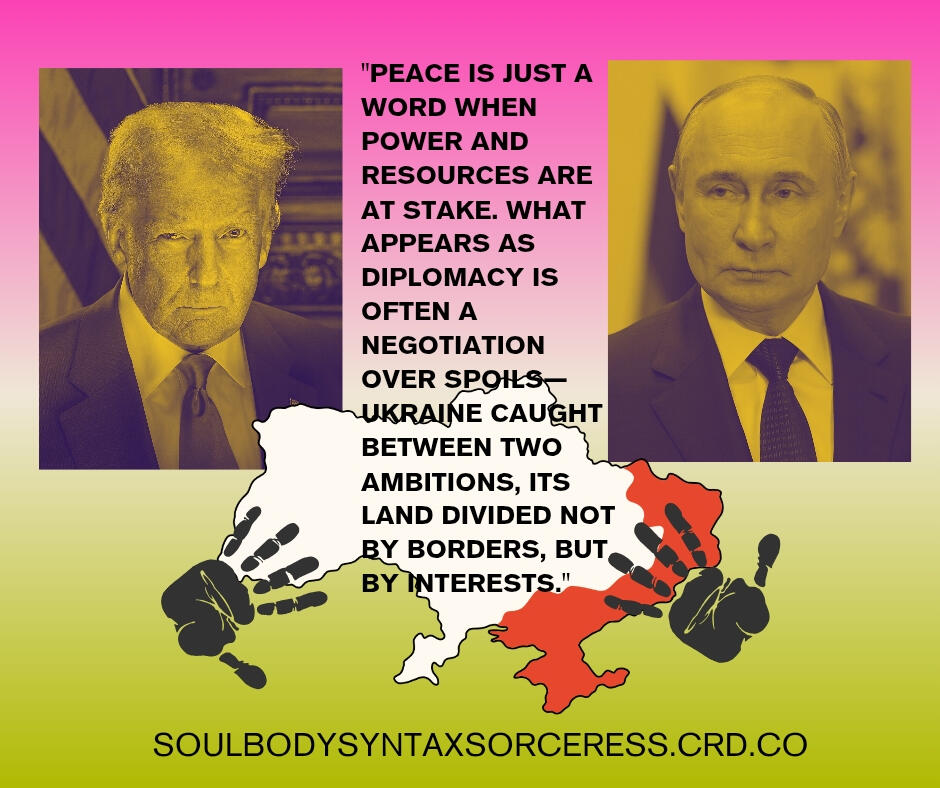
Trump and Putin: Is it New Yalta Treaty 1945? Ukrainian Peace Talks
Prospects for Peace Between Russia and Ukraine Amid Trump's InvolvementThe likelihood of achieving peace between Russia and Ukraine remains tenuous, as both nations maintain firm stances on critical issues, complicating potential ceasefire agreements. Ukrainian President Volodymyr Zelenskyy has accepted a U.S.-proposed 30-day ceasefire; however, Russian President Vladimir Putin has yet to commit, fearing Ukraine might use the pause to rearm . Putin's demands include Ukraine renouncing NATO aspirations, reducing its military, and recognizing Russian control over annexed territories, while Ukraine insists on security guarantees and the return of detained civilians . President Donald Trump's recent engagement in the peace process, including discussions with Putin about territorial concessions and control of the Zaporizhzhia nuclear power plant, raises questions about his intentions and effectiveness . Trump's history of sympathetic gestures toward Putin, coupled with U.S. intelligence reports indicating Russian interference favoring Trump in the 2016 election , suggests a complex relationship that may influence current diplomatic efforts. While Trump's optimism about brokering peace persists, the entrenched positions of Russia and Ukraine, alongside concerns about his impartiality, render the prospects for a lasting resolution uncertain.The present Ukraine peace deal negotiations share striking similarities with the Yalta Conference of 1945, where global powers—the U.S., U.K., and Soviet Union—divided post-war Europe into spheres of influence. Just as Roosevelt, Churchill, and Stalin determined the fate of Eastern Europe without direct representation from the affected nations, today's Ukraine-Russia peace talks involve powerful external actors (Russia, the U.S., and potentially China), influencing Ukraine’s territorial and political future.At Yalta, the Soviet Union secured control over Eastern Europe under the guise of security, just as Russia now insists on maintaining influence over eastern Ukraine, Crimea, and possibly other annexed regions. Meanwhile, Western allies in 1945 sought to limit Soviet expansion while securing democratic processes—today, the U.S. backs Ukraine militarily and diplomatically but could push for a settlement that aligns with its broader geopolitical interests, such as securing access to critical Ukrainian resources.A key difference is that Yalta resulted in formalized agreements that shaped the Cold War order, whereas the Ukraine negotiations remain volatile, with no enforceable agreement yet. However, if a settlement emerges, it may lead to an informal partition of Ukraine into a Western-aligned state and Russian-controlled territories, much like Eastern and Western Europe post-Yalta. This raises concerns that a "new Iron Curtain" could divide Ukraine, making it a battleground of influence rather than a truly sovereign nation.In essence, just as Yalta divided Europe into competing blocs, today's Ukraine peace talks risk cementing a geopolitical split—one dictated not by Ukraine's will alone, but by the interests of global superpowers.
Labour Fiscal Odyssey: Everything Everywhere All At Once.
From Manifesto to Reality: A Transformed Economic VisionSince their election in 2024, the UK Labour government has embarked on a complex economic journey, marked by pragmatism, compromise, and strategic recalibration. What began as a bold manifesto of progressive promises has evolved into a more nuanced approach to economic governance, shaped by global uncertainties and fiscal constraints.Taxation: A Tale of AdaptationThe most notable shifts have emerged in the government's taxation strategy. The manifesto's ambitious wealth tax proposal was notably absent, replaced instead by a more measured approach of closing tax loopholes and adjusting income tax brackets. The abolition of the non-domiciled tax status stands as a rare example of a promise fully delivered, generating an estimated £3.2 billion in additional revenue.Key Taxation Transformations
- Complete overhaul of non-dom tax status
- Corporate tax rate maintained at 25%
- More progressive income tax structure
- Targeted approach to closing tax avoidance mechanismsInvestment and Spending: Scaling Back AmbitionsPerhaps the most significant deviation from original promises lies in green investment. The manifesto's bold pledge of £28 billion annual green investment has been dramatically scaled back to £12-15 billion. This reduction reflects a broader trend of fiscal caution, prioritizing economic stability over expansive spending.Welfare and Agricultural Reforms: A Delicate BalanceThe government has implemented controversial changes to agricultural inheritance tax and welfare benefits:
- Reduced inheritance tax relief for larger agricultural estates
- Partial freezing of welfare benefits like PIP
- Stricter eligibility criteria for universal credit
- Estimated savings of £1.2 billion annually through benefit modificationsThe Spring Statement: A Window into Future StrategyThe upcoming Spring Statement on 26th March 2025 is expected to further crystallize the government's economic approach. Anticipated themes include:
- Measured infrastructure investment
- Targeted support for key economic sectors
- Continued emphasis on fiscal responsibility
- Strategic approaches to addressing cost of living challengesA Visionary Approach to Youth and Economic MobilizationIn response to persistent economic challenges, Labour has developed a comprehensive strategy for youth empowerment and economic revitalization:The £2.4 Billion Youth Opportunity InitiativeA groundbreaking program aims to establish 150 community development centres in the most deprived areas, focusing on:
- Skills and training
- Entrepreneurship support
- Digital literacy
- Mental health and social integrationPossible Projected Impact:
- 45,000 direct jobs created
- £6.8 billion in economic activity
- 22-28% reduction in youth unemploymentEconomic Philosophy: Pragmatism Over IdealismThe Labour government's approach can be characterized by:
- Fiscal conservatism
- Strategic investment
- Adaptive policy-making
- Balancing economic constraints with social objectivesChallenges and CriticismsThe pivot from manifesto promises has not been without tension:
- Internal party disagreements
- Criticism from traditional support base
- Challenges to the party's progressive imageLooking Forward: A Delicate Balancing ActAs the government moves forward, the key challenge remains clear: maintaining economic credibility while addressing social needs, navigating global economic uncertainties, and delivering meaningful change for UK citizens.The Spring Statement will be a critical moment, offering deeper insights into the government's evolving economic vision.**Disclaimer:Analysis based on information available up to March 2025, reflecting the dynamic nature of economic policy and governance.
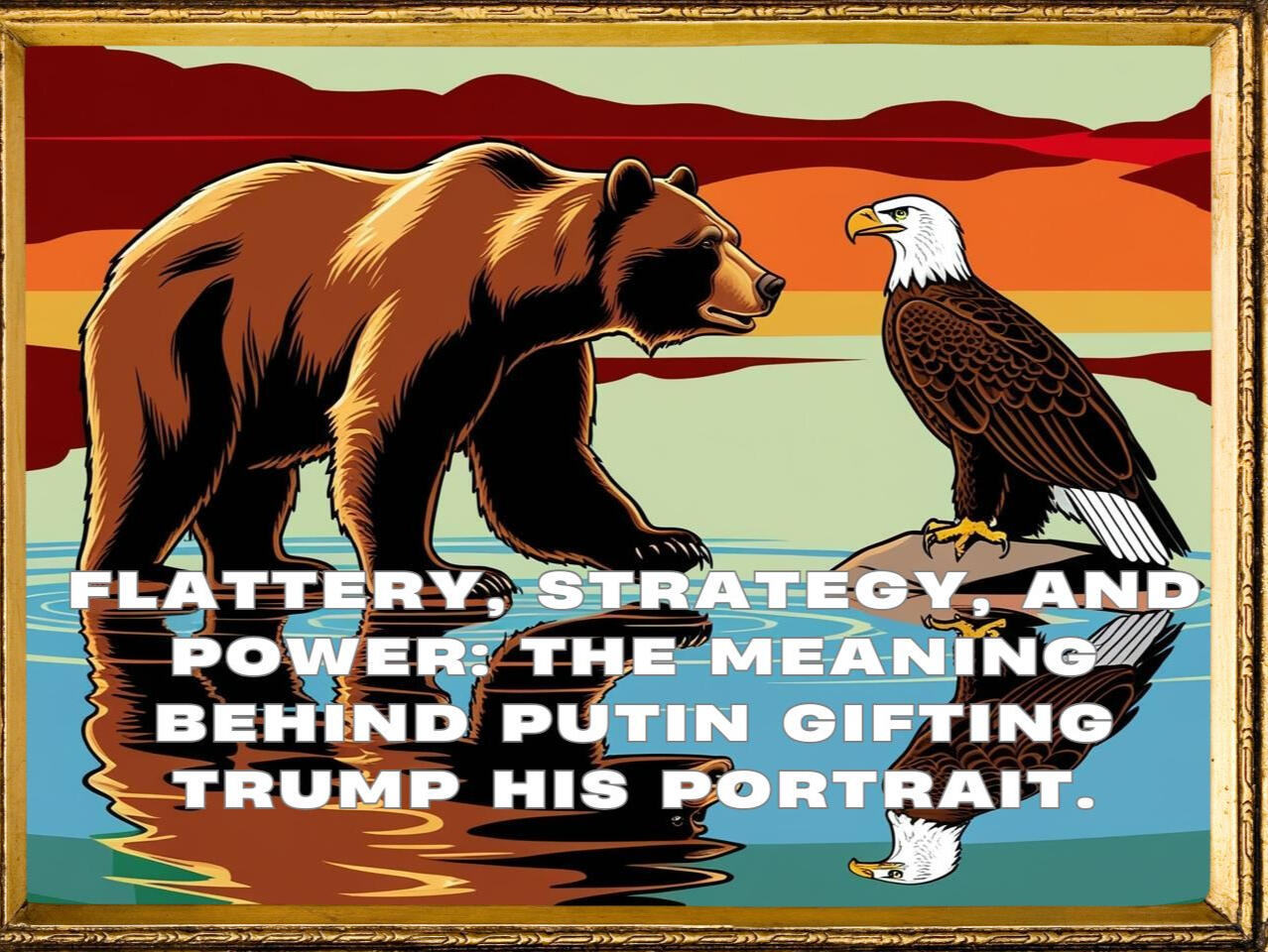
Flattery, Strategy, and Power: The Meaning Behind Putin Gifting Trump His Portrait
Flattery, Strategy, and Power: The Meaning Behind Putin Gifting Trump His Portrait
The gesture of Russian President Vladimir Putin gifting a portrait of former U.S. President Donald Trump holds symbolic, psychological, and political significance. Here’s a detailed analysis from multiple angles:1. Political Analysis:Putin’s gift can be interpreted as a strategic move in international diplomacy, carrying several potential messages:Symbol of Favorability: By presenting Trump with a portrait of himself, Putin reinforces the perception of camaraderie and personal admiration, potentially influencing Trump’s public stance on Russia.Flattery as Soft Power: Historically, Putin has used psychological tactics to appeal to leaders' egos. A personalized gift exploits Trump's well-known affinity for praise.Messaging to the World: It signals to both domestic and international audiences that Putin sees Trump as a significant figure, possibly implying political alignment or an attempt to maintain influence.Testing Reactions: The response of Trump and the U.S. administration to this gift might serve as an indicator of their stance toward Russia, providing insight into diplomatic relations.2. Psychological Analysis:This act reveals much about both leaders’ personalities and interaction dynamics.Putin’s Perspective:Putin is known for his calculated and strategic approach in dealing with world leaders. This gesture may demonstrate his understanding of Trump’s psychological profile and his ability to manipulate it.By gifting something so personal, Putin subtly reinforces dominance—giving a self-portrait could be interpreted as an act of control, setting the terms of their interaction.Trump’s Reaction:Trump has a well-documented preference for flattery and admiration. Receiving a gift featuring his own image aligns with his reported narcissistic tendencies.If Trump reacted positively, it reinforces the idea that he values personal admiration over traditional diplomatic norms.If he displayed unease, it could suggest an awareness of the manipulative undertone behind the gesture.3. What We Know About The Personalities of Both Leaders:While no definitive psychological diagnosis can be made without a direct clinical assessment, behavioral patterns offer clues.Vladimir Putin:● Strategic Machiavellianism – His leadership style exhibits high levels of calculation, emotional detachment, and power consolidation.● Cold War-Inspired Diplomacy – His actions often echo Soviet-era tactics of psychological warfare, using perception and image as weapons.● Kremlin-Centric – He sees personal relations with foreign leaders as extensions of Russian state power.Donald Trump:● Narcissistic Traits – Repeated patterns in Trump’s public behavior suggest a strong need for validation, admiration, and dominance.● Transactional Thinking – He often views relationships, including diplomatic ones, as deals with clear winners and losers.● Reactivity & Impulsiveness – Unlike Putin, who maintains long-term strategies, Trump’s behavior tends to be more reactionary.Overall Implications:The exchange of such a gift is not just a diplomatic pleasantry—it serves as a psychological maneuver. It reflects Putin’s tactical approach to engaging with leaders who are susceptible to flattery and suggests an attempt to exert subtle influence over Trump. At the same time, Trump’s reception of the gift and any response he gave would further reveal his sensitivity to public perception and admiration.Historical Parallels of Diplomatic Gift-Giving as a Strategy of InfluenceThe act of gifting in diplomacy is not merely ceremonial—it often carries deeper political and psychological undertones. Putin’s gift of a Trump portrait is part of a long tradition of world leaders using gifts to flatter, manipulate, or assert dominance. Here are some historical parallels that shed light on this strategic move:1. Napoleon Bonaparte’s Lavish Gifts to Foreign MonarchsTactic: Napoleon frequently sent extravagant gifts to European rulers, including paintings, fine jewelry, and personal portraits, to project an image of generosity and superiority.
Parallels to Putin & Trump: Like Putin, Napoleon understood that self-aggrandizing rulers could be swayed by flattery. By appealing to their vanity, he hoped to establish personal rapport while subtly asserting dominance.2.. Stalin’s Personalized Gifts to Roosevelt and Churchill (WWII Era)Tactic: Soviet leader Joseph Stalin often gifted rare and extravagant items—such as ornate Russian artworks, mink coats, and even symbolic weaponry—to Allied leaders Franklin D. Roosevelt and Winston Churchill during WWII negotiations.
Psychological Impact: These gifts aimed to demonstrate Soviet strength and generosity, fostering a sense of personal camaraderie that might influence diplomatic relations.
Parallels to Putin & Trump: Putin, like Stalin, uses carefully chosen gifts to build an image of personal goodwill while furthering national strategic interests.3. Hitler’s Personalized Gifts to MussoliniTactic: Adolf Hitler frequently sent Benito Mussolini luxurious and symbolic gifts, including custom-made statues, art, and military decorations, to cement their alliance.
Parallels to Putin & Trump: Hitler's gifts flattered Mussolini’s ego, reinforcing their partnership while subtly suggesting that Mussolini was the "junior partner" in their relationship. Putin’s portrait gift to Trump could similarly be interpreted as an assertion of influence, making Trump feel admired while also reinforcing Putin’s role as the manipulator.4. Chairman Mao’s Tea Set Diplomacy with NixonTactic: During the 1972 U.S.-China diplomatic thaw, Mao Zedong gifted Richard Nixon a set of rare Chinese tea leaves and ornate porcelain. This seemingly simple gesture symbolized a deep, historic offering of peace and cultural prestige.
Parallels to Putin & Trump: While Mao’s gift was about mutual respect, it carried a similar element of subtle persuasion—using a culturally significant token to shape perception. Putin’s gift, however, seems less about cultural respect and more about psychological manipulation.5. Queen Elizabeth II’s Subtle Gift DiplomacyTactic: The British royal family has a long tradition of giving thoughtful, symbolic gifts that convey historical ties and mutual respect. For example, Queen Elizabeth II gifted Barack Obama a framed photo of herself, a standard royal practice that subtly reinforced British sovereignty and tradition.
Parallels to Putin & Trump: Unlike the Queen’s neutral approach, Putin’s gift to Trump was hyper-personalized, making it more about psychological strategy than tradition.Key Takeaways from These Historical ParallelsGifts to Flatter and Manipulate: Autocrats (Napoleon, Stalin, Hitler) often use extravagant or personal gifts to appeal to a leader’s vanity and increase their influence.Symbolic Power Play: The gifting of portraits, in particular, often serves to reinforce a hierarchy—potentially signaling the giver's subtle dominance over the recipient.Testing the Recipient’s Reaction: How a leader reacts to such a gift can reveal their personality traits, including susceptibility to flattery, ego-driven decision-making, or diplomatic skill in handling psychological maneuvers.Putin’s portrait gift to Trump, then, fits into a long tradition of strategic gift-giving. It served not just as a diplomatic pleasantry but as a calculated move to appeal to Trump’s well-documented admiration for personal praise, potentially nudging him toward a more favorable stance toward Russia.How World Leaders Have Reacted to Strategic Diplomatic GiftsThroughout history, leaders have responded differently to symbolic and strategic gifts, often revealing their personalities, diplomatic awareness, or susceptibility to manipulation. Putin’s gift of a Trump portrait fits into this pattern of psychological tactics. Below are notable examples of leaders' reactions to such gifts and the broader implications of their responses.1. Richard Nixon’s Response to Mao Zedong’s Tea Set (1972)Gift: Mao Zedong gifted Nixon a rare tea set and special Chinese tea during their historic meeting.
Reaction: Nixon accepted the gift graciously and even emphasized the value of U.S.-China relations by drinking the tea in front of the press.
Implication: Nixon was aware of the symbolic importance of the gift. His response demonstrated diplomatic skill, as he used the moment to reinforce his administration’s openness to China while avoiding any suggestion that he had been “bought” by Mao’s gesture.Lesson for Trump-Putin: A leader with strong diplomatic instincts will recognize the deeper significance of such gifts and respond in a way that neutralizes any manipulative intent.2. Winston Churchill’s Response to Stalin’s Lavish Fur Coats (1940s)Gift: During World War II, Stalin sent Churchill rare Russian furs, paintings, and other luxuries.
Reaction: Churchill, a shrewd diplomat, accepted the gifts but did not allow them to influence his stance toward the Soviet Union. Instead, he continued to challenge Stalin’s post-war territorial ambitions.
Implication: Churchill’s response showed an understanding that such gifts were attempts to curry favor, but he refused to let them dictate policy decisions.Lesson for Trump-Putin: Strong leaders recognize flattery but do not allow it to alter their strategic decisions. If Trump saw Putin’s gift as an honor rather than a political maneuver, it might suggest he was more vulnerable to flattery.3. Benito Mussolini’s Response to Hitler’s Personal Gifts (1930s-1940s)Gift: Hitler sent Mussolini personalized gifts, including artwork, ceremonial swords, and a sculpted bust of Mussolini himself.
Reaction: Mussolini, eager for Hitler’s approval, displayed many of these gifts publicly and increasingly aligned his policies with Nazi Germany.
Implication: Mussolini’s acceptance and promotion of Hitler’s gifts reflected his psychological need for validation, ultimately leading him to become a subservient partner in the Axis alliance.Lesson for Trump-Putin: If Trump showcased Putin’s portrait gift or excessively praised it, it could indicate a susceptibility to external validation, making him more prone to influence.4. Barack Obama’s Response to Queen Elizabeth II’s Portrait (2009)Gift: Queen Elizabeth II gave Obama a framed photograph of herself, a customary royal gift.
Reaction: Obama accepted it respectfully but did not display it in a way that suggested undue admiration or deference.
Implication: Obama treated the gift as a diplomatic formality, neither elevating its significance nor using it to shift his policies toward the UK.Lesson for Trump-Putin: Leaders who maintain neutrality when receiving such gifts show they are not emotionally swayed by symbolic gestures. If Trump responded to Putin’s gift with excitement, it might suggest he was more easily influenced by personal admiration.5. John F. Kennedy’s Response to Khrushchev’s Gift of a Soviet Dog (1961)Gift: Soviet leader Nikita Khrushchev gave JFK a puppy named Pushinka, the offspring of a Soviet space dog.
Reaction: Kennedy accepted the gift warmly and allowed the dog to live at the White House. However, he did not change his tough stance on the Soviet Union.
Implication: JFK was able to separate personal gestures from political decisions, demonstrating that he could accept goodwill without compromising U.S. interests.Lesson for Trump-Putin: A skilled diplomat can acknowledge a gift without being psychologically influenced by it. If Trump viewed Putin’s gift as a personal endorsement rather than a political maneuver, it might indicate a lack of strategic awareness.Key Patterns in Leaders' Reactions to Diplomatic Gifts- Strategic Leaders (Churchill, Nixon, Obama, Kennedy): They accepted gifts graciously but remained conscious of their symbolic and political implications. Their responses neutralized any potential manipulation.- Ego-Driven or Easily Influenced Leaders (Mussolini): They openly embraced symbolic gifts and adjusted their policies or behaviors in response, often to their detriment.- Putin’s Playbook: Like Stalin and Hitler, Putin understands that some leaders can be swayed by gestures of personal admiration and uses this to his advantage.How Should Trump Have Responded?If Trump had strong diplomatic instincts, he would have:1. Acknowledged the Gift Casually – Thanking Putin but not overemphasizing its significance.2. Framed the Moment as a Formality – Positioning it as a routine diplomatic exchange rather than a personal honor.3. Avoided Public Display – Keeping the gift in private rather than showcasing it as a symbol of admiration.If Trump instead displayed excitement or saw it as a validation, it would indicate a susceptibility to flattery—a trait that Putin likely aimed to exploit.There is no widely documented record of Putin gifting Trump a portrait of himself, so the scenario appears hypothetical or speculative. However, Trump has received numerous symbolic gifts from foreign leaders, and his reactions to them can provide insights into how he might have responded to such a gesture from Putin.Analyzing How Trump Likely Reacted to a Hypothetical Portrait Gift from PutinBased on Trump's well-documented personality traits and past interactions with foreign leaders, we can infer his likely response using previous cases:1. Trump’s Known Love for Personalized Gifts and FlatteryTrump has frequently responded positively to gifts and gestures that feed his ego.Example: In 2018, Trump openly admired a letter he received from North Korean leader Kim Jong-un, even calling it “beautiful.”Example: When Saudi Arabia awarded him the country’s highest honor, the King Abdulaziz Medal, Trump smiled broadly and embraced the moment.Inference for Putin’s Portrait Gift: If Trump had received a self-portrait from Putin, he might have reacted with visible enthusiasm, possibly praising the gesture on social media or in public comments.2. Trump's Reactions to Putin’s Gestures in GeneralThroughout his presidency, Trump often spoke warmly of Putin and avoided direct criticism.Example: After his 2018 Helsinki meeting with Putin, Trump publicly stated, “I don’t see any reason why it would be Russia” that interfered in the 2016 U.S. election—essentially taking Putin’s word over U.S. intelligence agencies.Example: Trump repeatedly praised Putin as a “strong leader” and expressed admiration for his governing style.Inference for Putin’s Portrait Gift: If the gift had been real, Trump might have used it as an opportunity to express admiration for Putin, possibly saying something like, “That’s a tremendous gift—very special.”3. How Other U.S. Presidents Handled Similar SituationsObama’s Neutrality: When Queen Elizabeth II gifted him a framed photo of herself, he accepted it respectfully but did not elevate its significance.George W. Bush’s Awareness: When Putin gifted Bush a Labrador puppy, Bush accepted it but did not treat it as a deep personal honor.Inference for Putin’s Portrait Gift: A more traditionally cautious leader might have accepted the portrait politely but downplayed its importance. Trump, however, might have embraced it with public enthusiasm.Potential Public and Political Reactions to Trump’s ResponseIf Trump had reacted with excitement or publicly displayed the portrait, critics would likely have used it as evidence of his perceived closeness to Putin, fueling concerns about his stance toward Russia. His allies, however, might have dismissed the gift as a simple diplomatic gesture.Final Analysis: How Would Trump Have Likely Responded?Publicly: Enthusiastically, possibly praising Putin’s “strong leadership” and the “great honor” of receiving the portrait.Privately: Likely pleased, as the gift aligns with his appreciation for personal recognition.Politically: This could have fueled controversy, reinforcing narratives about his favorable stance toward Putin.What's your view? - share in comments on BlueSky.
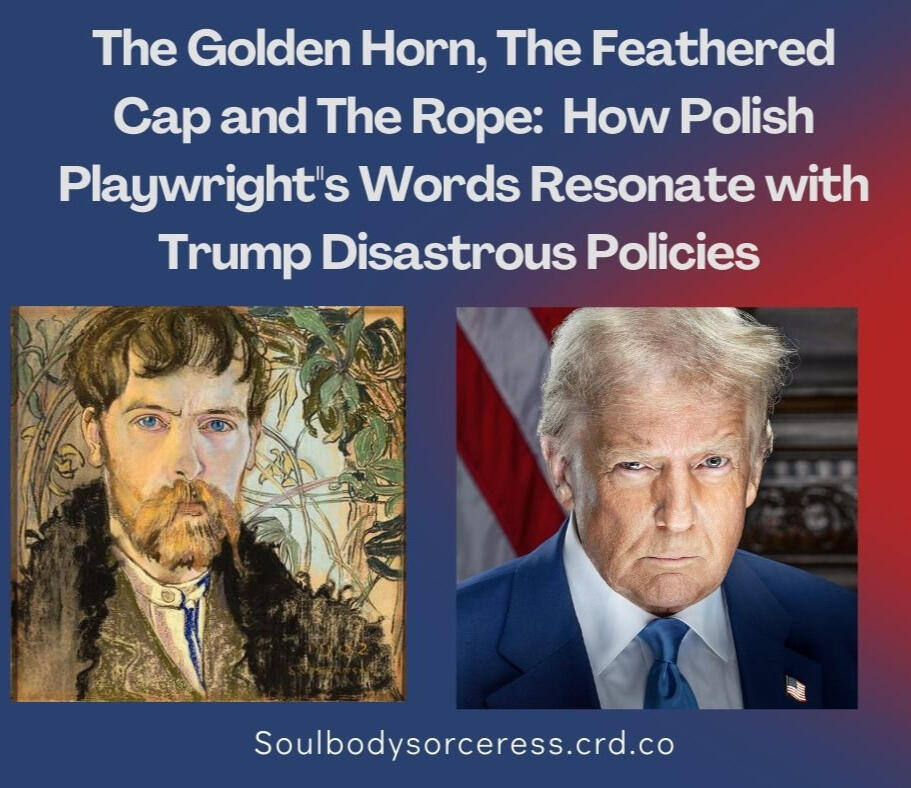
A Warning: How trump's Policies Destroy America
“You had, boor, a golden horn; you had, boor, a feathered cap: the cap is carried by the wind, the horn blows through the forest, you only have a rope left, you only have a rope left.”
– Stanisław Wyspiański, "Wesele" (The Wedding), 1901This haunting metaphor from Polish playwright Stanisław Wyspiański captures the emotional aftermath of squandered opportunity and unfulfilled potential. Written in a time of Polish national longing for independence, the quote speaks to those who, despite being given powerful tools for transformation, lose them through negligence, hubris, or inaction. In the modern context, it eerily mirrors the economic and geopolitical consequences of President Donald Trump’s second-term policies in 2025.A century-old verse by Polish playwright Stanisław Wyspiański has become an eerily fitting metaphor for the United States’ current trajectory under President Donald Trump’s second administration in 2025.In this haunting lament from The Wedding, Wyspiański captured the tragedy of squandered opportunity: a people once poised for greatness, now left with nothing but the remnants of what could have been. In many ways, these words now echo across the American economic and geopolitical landscape.1. The Golden Horn: Economic Power and Global LeadershipAt the outset of 2025, America still held the “golden horn” — a powerful economic position as the world's largest economy, a strong dollar, and deep trade partnerships. The horn symbolized the potential to lead on the global stage with diplomacy, collaboration, and innovation.However, the Trump administration’s renewed aggressive economic nationalism — including sweeping tariffs on imports from China, Canada, Mexico, and over 60 other nations — severely disrupted that position. The invocation of the International Emergency Economic Powers Act (IEEPA) in April to implement across-the-board 10% import tariffs, and up to 50% for targeted countries, marked a shift towards deep isolationism and economic self-reliance. Instead of strengthening American industry, these moves triggered retaliatory measures, fractured trade relationships, and sent foreign exchange markets into turmoil.Like the horn “blowing through the forest,” America’s once-commanding voice in global trade was lost amid rising uncertainty and shrinking alliances.. new, some dangerous alliances are formed now.The Golden Horn: America's Economic PowerAt the dawn of 2025, the United States still held immense global economic power — the “golden horn” — with a strong dollar, a rebound in consumer spending, and resilient global trade partnerships. Yet, within months, that horn was muffled.Trump’s renewed nationalist economic policies introduced sweeping tariffs on imports from China, Canada, Mexico, and over 60 other nations. In April, invoking the International Emergency Economic Powers Act, he implemented a 10% tariff on all imports, with some categories rising as high as 50%.Rather than protecting American industry, the move sparked retaliatory tariffs from global allies and stoked fears of a full-scale global trade war. China raised tariffs on U.S. coal and agricultural goods. Canada slapped $155 billion in countermeasures. Mexico prepared its own set of responses. Meanwhile, U.S. markets reacted swiftly: the S&P 500 tumbled, the Nasdaq fell by 2.6% in a single session, and foreign exchange markets shivered under the weight of uncertainty.The horn — a symbol of strength and leadership — now echoes unanswered through the global forest.2. The Feathered Cap: Diplomatic Prestige and International AlliancesThe “feathered cap,” a symbol of honor and leadership, was once a hallmark of U.S. diplomacy. Through decades of alliance-building — NATO, the WTO, G7 partnerships — America enjoyed prestige and influence. But under Trump’s second term, this cap has been “carried by the wind” as global alliances deteriorate.His administration's repeated undermining of multilateral agreements and hostile rhetoric toward traditional allies (especially Canada, Germany, and even NATO) led to global instability and mistrust. Tariff wars caused once-cooperative partners to turn defensive. Canada, for instance, responded with $155 billion in retaliatory tariffs, and China escalated agricultural and energy sector trade penalties.The U.S. position as a trustworthy global leader — the cap — drifted away in the winds of protectionism.
The cap — America’s global prestige — is now airborne, directionless, caught in the turbulence of transactional geopolitics.3. The Rope: Fragile RemrantsOnly a Rope Left: Domestic Consequences and Economic UncertaintyWhat remains, as Wyspiański wrote, is “only a rope” — a bleak metaphor for both despair and the limits of one’s control. Economically, the rope now symbolizes a fragile and reactive domestic market. As of April 2025:Markets have dropped significantly. The S&P 500 has lost nearly all post-election gains, and the Nasdaq-100 fell by 2.6% in just one day after the March tariff announcement.Unemployment is projected to rise to 5%.Inflation remains high, with core inflation near 4%, driven by supply chain costs and trade-related disruptions.The dollar has weakened in global markets, and foreign investment in U.S. bonds has slowed due to uncertainty.Business leaders, including JPMorgan CEO Jamie Dimon, have sounded alarms over inflation and a potential recession. The “rope” also symbolizes a tightening economic landscape for American consumers — rising prices, job insecurity, and lost confidence.What remains, as Wyspiański warned, is “only a rope.” A chilling image of powerlessness, tension, and looming collapse.That rope may now symbolize the American economy’s tenuous state:4. A Playwright’s Warning Across Time: A Warning, Not a EulogyWyspiański’s words are a poetic indictment of leadership that fails to steward national potential. In 2025, his metaphor aligns not just with Polish historical regret, but with the cautionary tale of a global superpower turning inward, and losing both its “horn” — its power to call the world — and its “cap” — the prestige to lead it.What’s left is not strength, but the threadbare remnants of missed opportunity.Wyspiański’s words weren’t just a lament — they were a call to awareness. A poetic mirror held up to a nation at risk of losing itself.In 2025, they feel like a prophecy.America had the horn: global leadership and economic might.
It had the cap: global trust and diplomatic influence.
Now, with the world reeling and markets buckling, what’s left is the rope — a fragile reminder of how easily power can unravel when wielded without vision.What do you think?